The Golden Handcuffs: Is Donor Dependency Killing Africa’s Ambition to “Silence the Guns”?
Sohaila Shamseldeen International Relations Researcher | Master of Law & Economics, University of Hamburg
12/21/20253 min read
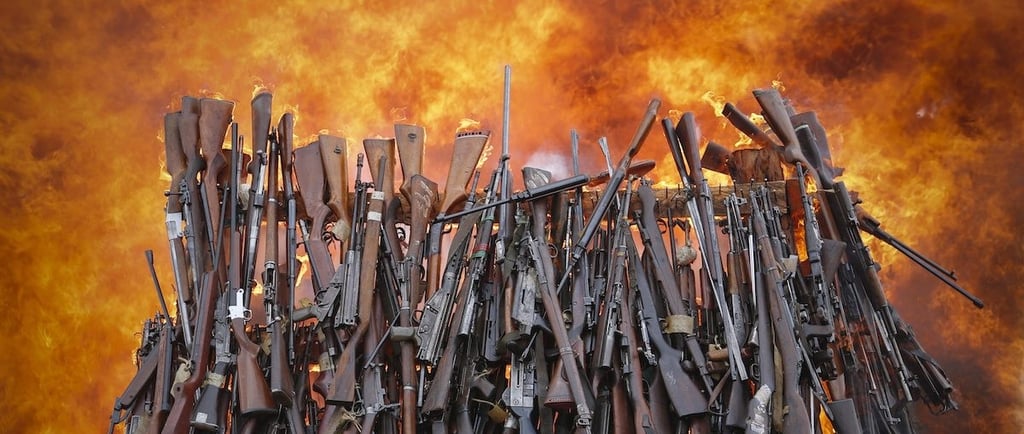
Africa’s leaders once shared a bold, transformative vision: "Silencing the Guns." As a flagship initiative of Agenda 2063, the goal was to end all wars, violent conflicts, and human rights abuses across the continent by 2030. But as the deadline nears, the silence is far from deafening. Instead, the gap between aspiration and reality is widening. While many blame political instability or ethnic tensions, a more systemic "governance trap" is at play: the African Union’s (AU) overwhelming financial dependence on external donors. When a continent’s peace and security are funded from the outside, the agenda is rarely set from within. This dependency isn’t just a logistical hurdle; it is a structural barrier that transforms the AU from a driver of continental peace into a vehicle for foreign priorities.
The Peace Fund: High Hopes, Short Pockets
At the heart of the AU’s strategy is the African Union Peace Fund (AUPF). It was designed to be the ultimate tool for autonomy—a fund managed by Africans, for Africans, to sponsor mediation and preventive diplomacy.
However, the reality is stark. While the AU made history in 2023 by pledging $7 million from its crisis reserve—the first significant activation of its kind—this amount is a drop in the ocean compared to the billions required for continental peace operations. Currently:
Member contributions remain irregular: Many states are late or default on payments, leaving the AU in a state of perennial unpredictability.
"Projectized" Funding: Most donor money is earmarked for specific projects. This means the AU cannot shift funds to where they are needed most; they must follow the donor's "prescribed templates."
The Sovereignty Gap: Without financial autonomy, the AU’s Peace and Security Council (PSC) often lacks the "fiscal maneuvering room" to act decisively in emergencies.
A Compromised Compass: When Donors Drive the Mission
When external actors hold the purse strings, they inevitably hold the map. This creates a priority distortionwhere the AU is forced to focus on what donors care about—typically counter-terrorism and migration control—rather than the root causes of African conflict like inequality, exclusion, and poor governance.
This "Governance Trap" manifests in three damaging ways:
Institutional Vulnerability: If a donor’s political interest shifts or a budget is cut, peace missions can freeze instantly, leading to salary arrears for troops and operational paralysis.
The Legitimacy Deficit: When peace missions are perceived as "foreign projects," they lose the trust of local populations. This makes it easier for insurgent groups to frame the AU as an agent of outside powers.
Fragmentation: Different donors fund parallel activities, leading to a "heavy coordination burden" and forcing African states to compete for funds rather than cooperate on strategy.
Case in Point: Somalia and the Sahel
The consequences of this trap are most visible in two of the continent's most volatile regions.
Somalia (AMISOM/ATMIS): Financed almost entirely by the European Union and other external partners, the mission is highly sensitive to donor timelines. When aid is reduced, the result is immediate troop withdrawals or reduced coverage. Furthermore, a heavy focus on kinetic counter-terrorism operationsoften comes at the expense of long-term local reconciliation.
The G5 Sahel: While designed as a regional security mechanism, its "operational muscle" is maintained by European and U.S. funding. This has sidelined local issues like climate adaptation and youth inclusion in favorof migration control, leaving the region’s deeper wounds unaddressed.
Reclaiming the Agenda: A Blueprint for Autonomy
To escape this trap, the AU must move from a model of "patronage" to one of "partnership." The path to an African-led peace requires a paradigm shift: viewing peace as a continuum of development.
Steps Toward Self-Financing
Binding Contributions: Implementing a 0.2% import levy on eligible goods to create a reliable, internal revenue stream for the Peace Fund.
Innovative Finance: Tapping into diaspora bonds, extractive industry levies, and African philanthropic foundations to diversify funding.
Development-Led Peace: Using the African Continental Free Trade Area (AfCFTA) to build economic interdependence. When regional value chains thrive, the "incentive for conflict" drops as trade and mobility transform rivals into partners.
The Path Forward: Recommendations for a Sovereign Peace
Ambition alone cannot silence guns. To turn the tide, the AU and its partners should:
Redefine the Relationship: Move toward "pooled funding" managed by continental institutions rather than fragmented, donor-driven grants.
Invest in Local Voices: Guarantee funding for grassroots peace committees, centering women and youth who understand the local social fabric better than any external consultant.
Strengthen African Research: Support domestic think tanks to ensure that conflict analysis is produced within Africa, ensuring that data—not donor checklists—informs policy.
Conclusion
The "Silencing the Guns" initiative is a testament to African ambition. But for this vision to succeed, the AU must break free from the "golden handcuffs" of donor dependency. The goal is not to reject international support, but to ensure that when the guns finally go silent, it is because of an African solution to an African challenge.
Download the full study here.
Follow African Narratives
Amplifying African voices for sustainable progress together.
Contact US
Connect
Street No. 3281, N'Djamena, Republic of Chad.
© 2026. All rights reserved.