Beyond Aid: Inside Japan’s Strategic Pivot to Africa
Ahmed Gamal El-Sayad – Political Science Researcher
12/7/20254 min read
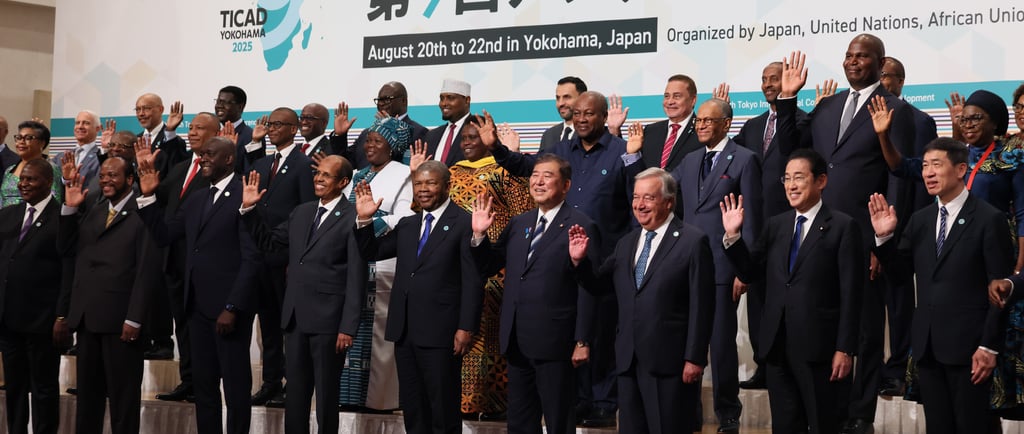
Over the past two decades, Africa has transformed from a recipient of development aid into a global geopolitical engine. With its vast natural resources, emerging markets, and critical location along global energy corridors, the continent has become the primary arena for competition among major powers. While China’s massive infrastructure projects often dominate the headlines, a quieter but equally significant shift is underway: Japan is rewriting its playbook for African engagement.
Tokyo is moving beyond its traditional donor-recipient model to forge a "new era" partnership based on balanced economic interests and strategic security. This isn't just benevolence; it is a necessity. To secure vital supply chains, diversify markets, and counterbalance Beijing’s growing influence, Japan is positioning itself as a high-quality, reliable alternative for African nations. For African leaders, this offers a crucial opportunity to acquire advanced technology and diversify alliances, escaping the trap of dependency on any single superpower.
Securing the Future: The Hunt for Critical Minerals
For Japan, the road to industrial security runs through Africa. As global competition intensifies for the rare earth elements essential to modern technology—from EV batteries to semiconductors—Japan is aggressively diversifying its supply chains to reduce reliance on limited sources.
Africa’s geological wealth is central to this strategy. The numbers illustrate the stakes:
Zimbabwe holds one of the continent's largest lithium reserves, a metal critical for battery production.
Mozambique accounts for nearly 10% of global graphite production.
The Democratic Republic of the Congo (DRC) is the world’s fourth-largest copper producer, with output hitting nearly 2.5 million tons in 2023.
South Africa hosts massive rare earth element (REE) reserves, including the Phalaborwa mine (approx. 30.4 million tons).
To lock in these resources, Tokyo has mobilized its public and private sectors. The Japan Organization for Metals and Energy Security (JOGMEC) is actively exploring projects in South Africa, Zambia, and Malawi. Furthermore, Japan has pledged a $1 billion investment in the DRC for lithium and copper exploration. These moves are designed to ensure that Japan's manufacturing sector remains resilient in an increasingly volatile global market.
The "China Factor" and the Alternative Model
Strategic rivalry with China is the unspoken driver of Tokyo’s Africa policy. While Japan acknowledges it cannot match the sheer scale of Chinese lending, it markets itself as the "quality" alternative. Japan offers partnerships grounded in transparency, human development, and high-tech expertise, distinguishing itself from the "debt-trap" concerns often associated with the Belt and Road Initiative.
This approach is visible in Japan's infrastructure financing. Rather than blanket loans, Japan targets strategic logistics hubs, such as the €350 million loan to Madagascar for the Toamasina port and funding for the Port of Dakar in Senegal. By focusing on the "Free and Open Indo-Pacific" (FOIP) strategy, Japan aims to secure the sea lanes vital to its own energy security while integrating African economies into the broader Asian market.
The African Perspective: Why Tokyo?
For African nations, strengthening ties with Japan is a strategic hedge. It allows them to balance international partnerships and assert political independence. But beyond geopolitics, the tangible benefits of a Japanese partnership are distinct.
1. Technology Transfer and Infrastructure Japan is leveraging its tech leadership to modernize African infrastructure. This includes deploying 5G networks, digital data centers, and renewable energy grids. For instance, the Japan New Energy and Industrial Technology Development Organization (NEDO) is currently partnering with Morocco on major solar energy projects, while NEC is upgrading internet backbones in South Africa and Kenya.
Getty Images
2. Disaster Resilience Japan’s unique experience with natural disasters offers invaluable lessons for a continent increasingly vulnerable to climate change. Following Cyclone Idai in 2019, the Japan International Cooperation Agency (JICA) helped Mozambique implement advanced early warning systems. Similarly, in agriculture, Japan introduced drought-resistant rice varieties (NERICA) in Uganda, directly addressing food insecurity.
Soft Power with Hard Edges: The Diplomatic Toolkit
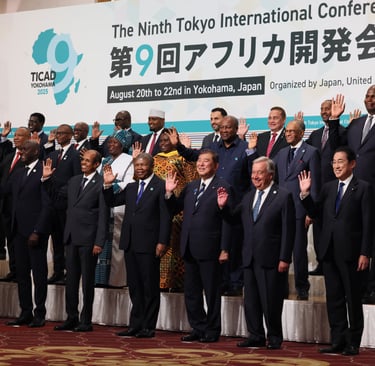
Japan supports its economic ambitions with a robust diplomatic architecture. The cornerstone of this engagement is the Tokyo International Conference on African Development (TICAD). Since 1993, TICAD has served as a multilateral forum that prioritizes "African ownership" of development projects.
The results are substantial. At TICAD 8, Japan announced a $30 billion aid package, allocating $4 billion specifically for green growth. More recently, Prime Minister Shigeru Ishiba proposed an "Indian Ocean-Africa Economic Zone Initiative" to further integrate the regions.
Beyond economics, Japan is stepping up as a security partner. From funding counter-terrorism training in the Sahel to supporting coast guards in the Gulf of Guinea, Tokyo is proving that its pacifist constitution does not preclude it from contributing to global stability.
Conclusion: A Partnership of Equals
The era of Japanese-African relations defined solely by aid is over. It has been replaced by a strategic alliance driven by mutual necessity. Japan secures the resources and markets needed to sustain its economy and counterbalance global rivals; Africa gains a partner committed to high-quality development, technology transfer, and political respect.
As global power competition heats up, this relationship serves as a model for how nations can collaborate on shared interests. However, for this partnership to thrive, Tokyo must maintain its distinct value proposition—quality over quantity—offering African nations a sustainable path to development that safeguards their sovereignty.
Key Takeaways
Resource Security: Japan is heavily investing in African mining (Lithium, Copper, REEs) to secure supply chains for its tech sector.
Strategic Balance: Japan positions itself as a transparent, high-quality alternative to Chinese influence in the region.
Tech & Resilience: African nations benefit from Japanese expertise in 5G, renewable energy, and disaster management.
Future Focus: The relationship is evolving into an "Indian Ocean-Africa Economic Zone," integrating the two regions' economies more closely than ever before.
Download the full study here.
Follow African Narratives
Amplifying African voices for sustainable progress together.
Contact US
Connect
Street No. 3281, N'Djamena, Republic of Chad.
© 2026. All rights reserved.